.avif)
What if your brand voice isn’t the problem—but the platform is? In this episode of The Highlight, Chandler Lyles sits down with Charlie Sells, a seasoned copywriter and content strategist, to unpack the hidden layers of effective messaging for ecommerce brands.
This conversation is a goldmine for founders, marketers, and anyone responsible for digital revenue. Charlie shares battle-tested strategies for matching your message to the medium, optimizing creative through structured testing, and delivering a consistent, emotionally resonant customer experience—after the sale. Whether you're a DTC brand spending thousands on ads or a solopreneur refining your homepage, the episode challenges the assumption that great copy is just about clever words. It’s about empathy, iteration, and alignment.
If your emails aren’t converting, if your landing pages feel flat, or if your brand voice is inconsistent across platforms—this episode will hit home.
Too many brands make the mistake of copying and pasting their message across every platform. But what works on LinkedIn won’t necessarily land on TikTok, Amazon, or your email list. Charlie explains that every platform comes with its own algorithmic biases and user expectations. What matters is not just saying the right thing—but saying it in the right way for the context.
Instead of sticking to “your brand’s best practices,” Charlie advises being equally mindful of the platform’s best practices. For example, TikTok favors quick, emotionally engaging storytelling. Amazon requires clarity and keyword optimization. The more your voice adapts without losing brand integrity, the more traction you’ll gain.
“Don’t settle,” says Charlie. The highest-converting campaigns rarely win on gut feeling—they win because they’re tested. In one example from his days at Ramsey Solutions, Charlie helped run a multi-round headline test that ultimately revealed a surprising winner. The one they wouldn’t have picked? It converted the best.
He outlines simple but powerful tests: A/B email subject lines (emotional vs transactional), time-of-day sends, even experimenting with sentence case vs all lowercase. The lesson: get your copy out of the echo chamber and into the wild. Even the smallest tweaks—like a well-placed emoji or casual phrasing—can deliver measurable uplift when backed by real data.
Levity isn’t just “nice to have.” It’s a conversion tool. “If it sounds like a robot, people are going to check out,” Charlie warns. Humor builds trust, lowers the customer’s guard, and gets your content shared. From Liquid Death’s outrageous campaigns to a clever post-purchase letter Charlie received with a box (“We all know those other bums treat your wallet like a piñata…”), the best brands make you feel something.
But humor only works when it’s aligned with your brand archetype. Liquid Death is the jester. Yeti is the explorer. When brands stray from their emotional lane—like Yeti co-branding a coffin with Liquid Death—it backfires. The takeaway? Know your emotional zone, and play within it. Levity wins when it’s on-brand.
Audit one piece of your current marketing content—like a landing page, product description, or email—and rewrite it for a different platform.
Take the same message and tailor it for TikTok, or shift an email into a LinkedIn-style post.
Notice how the tone, format, and pacing need to change.
This simple exercise will force clarity around your brand voice and reveal new creative angles.
How do we create ads that cut through the noise? Great ad copy. Creative ad copy is the cornerstone of any great ad campaign.
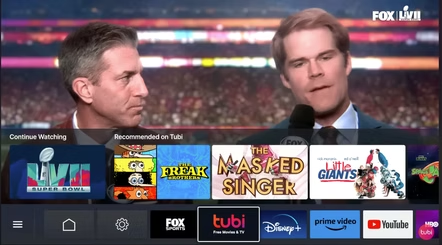
As an advertising agency, like so many of you, we love to watch the ads. There are always winners who got a bargain for the money they spent